
Introduction
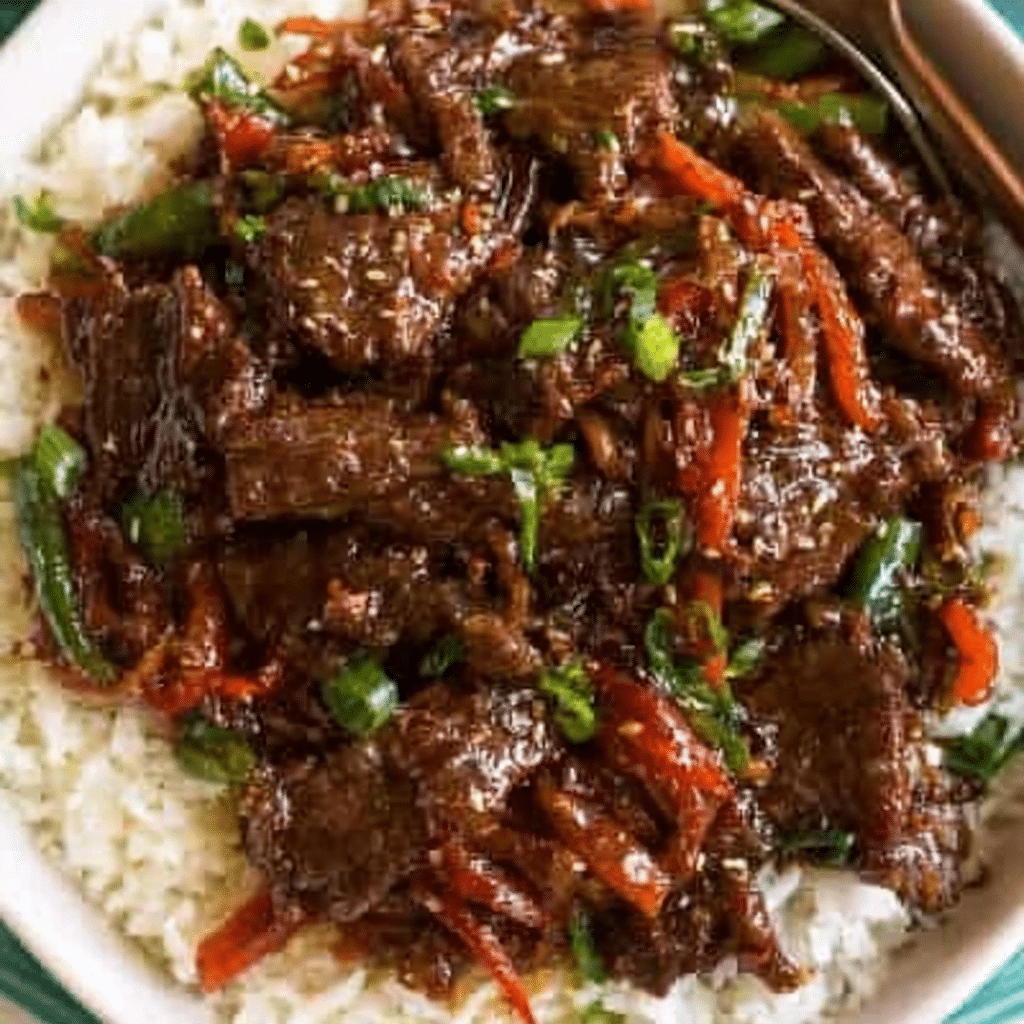
This Mongolian Beef is a fast, savory dinner featuring thinly sliced flank steak coated in cornstarch and cooked until lightly crisp before being tossed with a rich brown sugar and soy sauce glaze.
Fresh ginger and garlic add warmth and depth, while Sriracha brings a gentle kick. Julienned carrots, red bell pepper, and green onions add color and a little crunch, making the dish feel complete without requiring a long list of ingredients.
Serve it over steamed white rice or noodles for an easy weeknight meal. The sauce is especially good when it has just enough time to reduce and cling to the beef.
Quick Recipe Overview
| Category | Details |
|---|---|
| Prep Time | 15 minutes |
| Cook Time | 15 minutes |
| Total Time | 30 minutes |
| Servings | 4 |
| Difficulty | Easy |
| Cuisine | Chinese-American |
| Course | Main Course / Dinner |
Ingredients
For the Beef and Vegetables
- 1 lb flank steak, thinly sliced against the grain
- ¼ cup cornstarch
- 1 carrot, peeled and julienned
- 1 red bell pepper, sliced into strips
- ⅓ cup green onions, thickly sliced, from about 4 stalks
- 1 tablespoon unsalted butter
- 2 tablespoons neutral oil, divided
- 1 teaspoon sesame seeds, optional, for garnish
For the Sauce
- 1 teaspoon fresh ginger, peeled and grated
- 4 garlic cloves, peeled and grated
- ⅓ cup packed brown sugar
- ⅓ cup water
- ⅓ cup low-sodium soy sauce
- 1 teaspoon Sriracha, or more to taste
Step-by-Step Instructions
1. Slice the steak
Place the flank steak on a cutting board and identify the direction of the muscle fibers.
Slice the steak against the grain into thin strips. Thin slices cook quickly and are easier to chew.
If the steak is difficult to slice thinly, place it in the freezer for about 15–20 minutes first. It should become slightly firm but not frozen solid.
2. Coat the beef
Place the sliced steak in a bowl and sprinkle with the cornstarch.
Toss thoroughly until the pieces are lightly and evenly coated. Shake off any excess cornstarch.
Let the coated beef sit for about 5–10 minutes while you prepare the sauce and vegetables.
3. Prepare the sauce
In a bowl, combine the grated ginger, grated garlic, brown sugar, water, low-sodium soy sauce, and Sriracha.
Stir until the sugar is mostly dissolved.
Set the sauce aside.
4. Cook the vegetables
Heat a large skillet or wok over medium-high heat.
Add the butter and 1 tablespoon of the neutral oil.
Add the carrots and bell pepper. Stir-fry for about 2–3 minutes, just until the vegetables begin to soften but still have some bite.
Transfer them to a plate and set aside.
5. Cook the beef
Add the remaining 1 tablespoon of oil to the skillet.
Working in batches if necessary, add the cornstarch-coated beef in a single layer.
Cook for approximately 2–3 minutes per side, depending on how thin the slices are, until browned and cooked through.
Avoid overcrowding the pan. Too much beef at once can cause it to steam instead of developing a browned exterior.
6. Add the sauce
Return all of the cooked beef to the skillet.
Pour in the prepared sauce and bring it to a gentle simmer.
Cook for approximately 2–4 minutes, stirring frequently, until the sauce reduces and becomes glossy enough to coat the beef.
7. Add the vegetables and green onions
Return the cooked carrots and bell pepper to the skillet.
Add the sliced green onions and toss everything together for about 1 minute.
The vegetables should remain slightly crisp while the sauce coats the beef.
8. Garnish and serve
Remove the skillet from the heat.
Sprinkle with sesame seeds if using and serve immediately over steamed rice or your favorite noodles.
Recipe Tips for Success
- Slice against the grain. This is one of the most important steps for tender flank steak.
- Keep the beef thin. Thick pieces take longer to cook and won’t develop the same lightly crisp coating.
- Don’t overcrowd the pan. Cook the steak in batches if necessary so the pieces brown rather than steam.
- Use fresh garlic and ginger. Grating them finely distributes their flavor throughout the sauce.
- Don’t over-reduce the sauce. It should become glossy and coat the beef, but it shouldn’t turn into a thick, sticky paste.
- Keep the vegetables slightly crisp. Overcooking the carrots and bell pepper can make the finished dish heavy and soft.
- Taste before adding extra soy sauce. The sauce already contains a significant amount of sodium.
Ingredient Substitutions
Flank Steak
Top sirloin or skirt steak can be used instead. Slice whichever cut you choose thinly against the grain.
Soy Sauce
Tamari can replace soy sauce. For a gluten-free meal, use gluten-free tamari and make sure the other packaged ingredients are also gluten-free.
Sriracha
Use another chili sauce if needed, or leave it out for a milder version.
Brown Sugar
Light brown sugar works well. Honey can also provide sweetness, although it will slightly change the flavor and texture of the glaze.
Vegetables
The carrot and bell pepper can be replaced or supplemented with broccoli, snow peas, mushrooms, or sliced onions.
Recipe Variations
Spicy Mongolian Beef
Increase the Sriracha or add red pepper flakes for more heat.
Mongolian Beef With Broccoli
Add broccoli florets along with the carrots and bell pepper. Steam or stir-fry the broccoli until just tender before combining it with the beef.
Mongolian Beef Noodles
Toss the finished beef with cooked noodles for a complete one-pan-style noodle meal.
Extra-Garlic Mongolian Beef
Add another clove or two of fresh garlic for a stronger garlic flavor.
Mongolian Beef Rice Bowls
Serve the beef over steamed rice and add extra green onions, sesame seeds, and thinly sliced fresh vegetables.
Storage and Reheating
Store leftover Mongolian Beef in an airtight container in the refrigerator.
For the best quality, eat the leftovers within 3–4 days.
Reheat gently in a skillet over medium-low heat. Add a small splash of water if the sauce has thickened considerably in the refrigerator.
Individual portions can also be reheated in the microwave. Stir halfway through heating to distribute the sauce evenly.
The beef coating may soften after refrigeration, so the leftovers won’t have quite the same texture as freshly cooked beef.
Serving Suggestions
Mongolian Beef is especially good served over:
- Steamed white rice
- Jasmine rice
- Brown rice
- Fried rice
- Rice noodles
- Chow mein-style noodles
For additional vegetables, serve it with:
- Steamed broccoli
- Stir-fried green beans
- Edamame
- Cucumber salad
- Sautéed bok choy
Finish with sliced green onions and sesame seeds for extra freshness and texture.
Nutrition Information
Estimated per serving, assuming 4 servings and excluding optional sesame seeds. Actual nutrition will vary depending on the cut of beef, amount of oil absorbed during cooking, and brands of soy sauce and other ingredients.
- Calories: ~500
- Protein: ~34 g
- Carbohydrates: ~42 g
- Fat: ~23 g
- Saturated Fat: ~7 g
- Fiber: ~2 g
- Sugar: ~25 g
- Sodium: ~1,300 mg
Frequently Asked Questions
What cut of beef is best for Mongolian Beef?
Flank steak works particularly well because it can be sliced thinly against the grain. Top sirloin or skirt steak are also reasonable alternatives.
Why is my Mongolian Beef tough?
The steak may have been sliced with the grain or cooked for too long. Slice it thinly against the grain and cook it quickly over relatively high heat.
Can I make Mongolian Beef less sweet?
Yes. Reduce the brown sugar to taste. Keep in mind that the sugar contributes to the characteristic glossy glaze, so reducing it will also slightly change the sauce’s texture.
Can I make this recipe spicy?
Yes. Add more Sriracha or a pinch of red pepper flakes. You can also serve extra Sriracha at the table.
Can I use another type of steak?
Yes. Thinly sliced sirloin or skirt steak can work well. Always slice against the grain for the best texture.
Can I add broccoli?
Absolutely. Broccoli is one of the easiest vegetables to add to this recipe. Cook it until just tender before tossing it with the beef and sauce.
Can I freeze Mongolian Beef?
Yes, although the cornstarch coating will soften after freezing and thawing. Store it in an airtight freezer-safe container, thaw it in the refrigerator, and reheat gently.
What should I serve with Mongolian Beef?
Steamed jasmine or white rice is the simplest choice. Noodles, fried rice, or additional stir-fried vegetables also pair well with the sweet-savory sauce.
Final Thoughts
This Mongolian Beef keeps dinner simple while delivering plenty of savory, sweet, and spicy flavor. The combination of thinly sliced beef, fresh garlic and ginger, crisp vegetables, and a glossy soy-brown sugar sauce makes it especially satisfying over a bowl of steamed rice.
For the best result, focus on the basics: slice the steak against the grain, avoid overcrowding the skillet, and let the sauce reduce just enough to coat the beef.
Print
Mongolian Beef
This easy Mongolian Beef is a delicious weeknight dinner featuring thinly sliced flank steak coated in a crispy cornstarch crust and tossed with a sweet, savory, and slightly spicy sauce. Fresh ginger, garlic, brown sugar, soy sauce, and Sriracha come together with colorful vegetables for a flavorful restaurant-style meal at home.
- Total Time: 35 minutes
- Yield: 4 servings 1x
Ingredients
- 1 carrot, peeled and julienned
- 1 red bell pepper, sliced into strips
- 1 tablespoon unsalted butter
- 2 tablespoons neutral oil, divided
- 1 lb flank steak, thinly sliced against the grain
- ¼ cup cornstarch
- ⅓ cup green onions, thickly sliced, from about 4 stalks
- 1 teaspoon sesame seeds, optional, for garnish
For the Sauce:
- 1 teaspoon fresh ginger, peeled and grated
- 4 garlic cloves, peeled and grated
- ⅓ cup packed brown sugar
- ⅓ cup water
- ⅓ cup low-sodium soy sauce
- 1 teaspoon Sriracha, or more to taste
Instructions
- Thinly slice the flank steak against the grain and pat it dry with paper towels. Place the steak in a bowl and toss thoroughly with the cornstarch until evenly coated.
- In a small bowl, whisk together the grated ginger, grated garlic, brown sugar, water, low-sodium soy sauce, and Sriracha. Set the sauce aside.
- Heat 1 tablespoon of neutral oil and the butter in a large skillet or wok over medium-high heat.
- Add the julienned carrot and sliced red bell pepper. Stir-fry for 3–4 minutes, until slightly tender but still crisp. Remove the vegetables and set aside.
- Add the remaining 1 tablespoon oil to the same skillet. Working in batches if necessary, add the cornstarch-coated steak in a single layer.
- Cook the steak for about 2–3 minutes per side, until browned and crispy. Avoid overcrowding the pan so the beef can sear properly.
- Return the cooked vegetables to the skillet and pour in the prepared sauce.
- Bring the sauce to a gentle simmer and toss everything together for 2–4 minutes, until the sauce thickens and coats the beef and vegetables.
- Stir in the sliced green onions and cook for another 30 seconds.
- Remove from the heat, garnish with sesame seeds if desired, and serve immediately with steamed rice or noodles.
Notes
- Slice the flank steak thinly against the grain for the most tender texture.
- Make sure the steak is well coated with cornstarch before frying to create a crispy exterior.
- Cook the beef in batches if needed to prevent steaming and overcrowding.
- Adjust the amount of Sriracha to make the sauce milder or spicier.
- Low-sodium soy sauce helps control the overall saltiness of the dish.
- Serve with steamed white rice, brown rice, or noodles for a complete meal.
- For extra vegetables, add broccoli, snow peas, or sliced onions.
- Prep Time: 15 minutes
- Cook Time: 20 minutes
- Category: Dinner
- Method: Stovetop
- Cuisine: Asian-Inspired
Nutrition
- Serving Size: 1 serving
- Calories: 510
- Sugar: 20 g
- Sodium: 1050 mg
- Fat: 25 g
- Saturated Fat: 8 g
- Unsaturated Fat: 14 g
- Trans Fat: 0 g
- Carbohydrates: 42 g
- Fiber: 3 g
- Protein: 35 g
- Cholesterol: 85 mg